Dentistry That Starts Right for Kids
Because how it feels the first time matters.
Their First Visit Sets the Tone
The way a child experiences the dentist early on — whether they feel safe, heard, and in control — shapes how they think about their oral health for decades. That's not an overstatement. It's one of the reasons we take pediatric visits so seriously here.
We don't rush kids. We don't talk over them to their parents. We explain what we're going to do before we do it, and we mean it when we say they can slow us down or stop us at any point. Our goal at that first visit isn't just clean teeth — it's a child who walks out the door without a knot in their stomach about coming back.
When to Bring Your Child In
The short answer: earlier than you might think. Most dental guidelines recommend a child's first visit around their first birthday, or within six months of their first tooth coming in — whichever comes first. That might sound early, but there's a good reason for it.
Baby teeth matter more than they sometimes get credit for. They hold space for permanent teeth, help with speech development, and yes — they can get cavities. Starting visits early means we catch small problems before they become bigger ones, and it means your child gets used to the sights, sounds, and rhythms of a dental office while the stakes are low.
For a lot of families, that first visit is mostly about getting comfortable. We'll take a look, count some teeth, talk to you about what's coming in and what to watch for, and answer whatever questions you've been storing up. There's no pressure to do more than your child is ready for. If they need a few minutes to warm up — or to sit in your lap for the whole visit — that's completely fine with us.
The earlier we meet your child, the more we become a familiar face rather than a stranger in a mask. That familiarity is worth something. It's the difference between a child who avoids the dentist as an adult and one who just... goes.
Baby Teeth, Big Milestones
Most children start getting their first teeth around six months, and by age three, most kids have a full set of 20 baby teeth. Those teeth usually start making way for permanent ones around age six — but every child moves at their own pace, and that's normal.
Here's what's worth knowing: baby teeth aren't placeholders to be ignored until they fall out. They guide permanent teeth into position, support jaw development, and play a real role in how your child learns to speak. A cavity in a baby tooth can cause pain and infection just like one in a permanent tooth — and it can affect the tooth growing underneath it.
At each checkup, we'll keep an eye on how your child's teeth are developing, flag anything worth watching, and talk you through what's typical for their age. You'll leave knowing what's next — not guessing.
Brushing and Flossing at Every Age
Brushing starts before you might expect — even before teeth arrive, wiping your baby's gums with a soft, damp cloth gets them used to the sensation. Once that first tooth appears, it's time for a soft-bristled brush and a tiny smear of fluoride toothpaste — about the size of a grain of rice.
By age three, you can work up to a pea-sized amount of toothpaste. Kids should be supervised while brushing until around age six or seven, when most have the coordination to do a thorough job on their own. Until then, think of it as a team effort — they go first, you finish up.
Flossing starts as soon as two teeth are touching. That's usually around age two or three for most kids. It doesn't have to be a battle — floss picks can make it easier, and keeping it part of the nighttime routine early means it's just something you do, not something you fight about.
We're happy to walk through any of this in person and show you what works for your child's specific needs. No judgment if the routine isn't perfect yet — we'll just help you build one.
What Checkups Actually Prevent
Twice-a-year checkups aren't about checking a box — they're the most reliable way to catch things before they become problems that require bigger treatment. Tooth decay is the most common chronic childhood condition in the U.S., and most of it is preventable with early, consistent care.
At each visit, we clean your child's teeth, check for early signs of decay, and assess how their bite and jaw are developing. We also offer fluoride treatments and dental sealants — a thin protective coating applied to the back teeth where most childhood cavities form. These aren't extras; they're some of the most effective tools we have for keeping kids out of the treatment chair.
Beyond decay prevention, regular visits mean we're watching how permanent teeth come in and flagging early anything that might benefit from orthodontic attention down the road — so you have time to plan rather than react. The goal is always fewer surprises, not more appointments.
We Already Know a Few Kids Here
Come in and let us get to know yours, too.

Ready to Schedule? We'll Make It Easy.
A lot of parents tell us they sent their kids in first — to see how things went before booking their own appointment. We know what that means, and we take it seriously every single time. When your child comes through our door, they're going to meet the same team, the same calm, and the same patience that every patient here gets.
We see kids of all ages, from first teeth to teenage years, and we'll be honest with you about what's typical, what needs attention, and what can wait. No upselling. No alarm bells that don't need ringing. Just a clear picture of where your child's mouth is and what to do next.
If your child has had a hard time at the dentist before — anxious, resistant, or just had one bad experience that stuck — tell us when you call. We'll talk through what made it hard and figure out how to make this one different. We have options, we have patience, and we're not in a hurry.
Scheduling is simple. You can call us or reach out online, and we'll get your family set up. Paperwork is sent digitally ahead of time so the visit itself can be about your child — not clipboards.
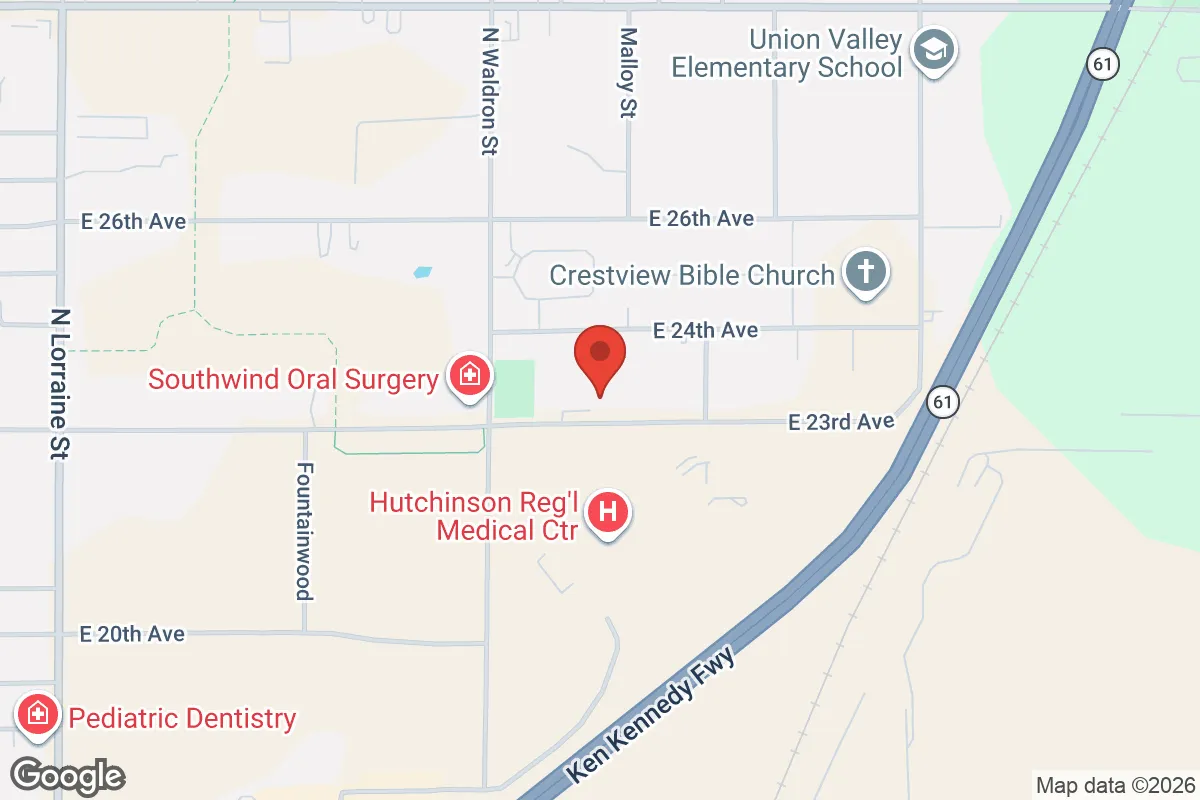
We see families in Hutchinson, KS and the surrounding area. New patients are always welcome.

"Hygienist was very thorough and did great cleaning my teeth! Both the hygienist and Dr. Dosch are great at answering any questions you might have! Highly recommended and so easy to work with!"